01
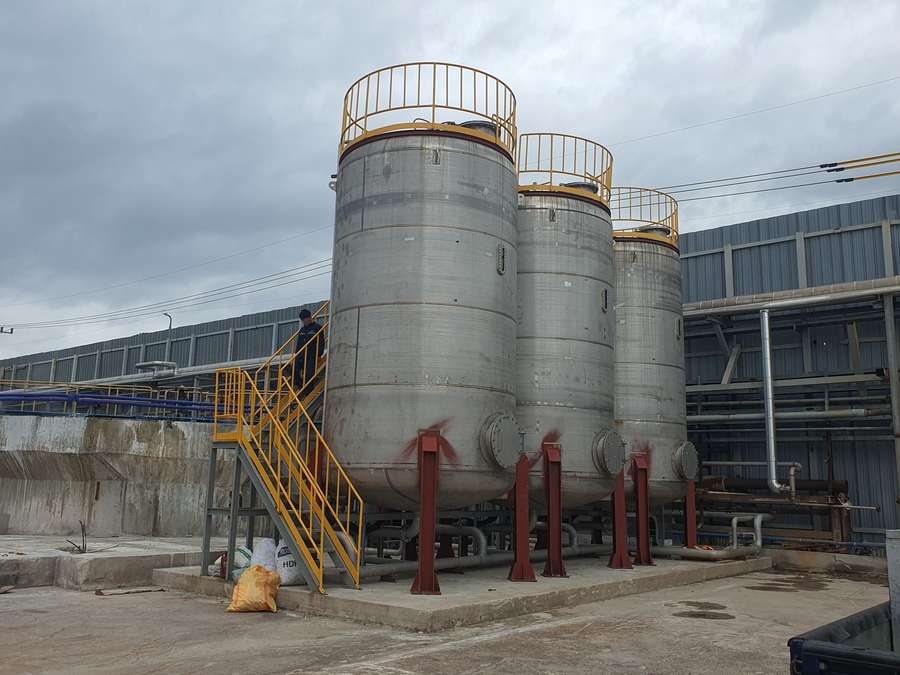
Wastewater Inflow & Equalization
Fluctuations in flow rate and water quality over time are smoothed to stabilize downstream processes.
ENVIRONMENTAL SOLUTION
INDUSTRIAL WATER TREATMENT
The type and concentration of pollutants in industrial wastewater vary greatly depending on the production process and raw materials used. Stable discharge water quality requires accurately understanding influent quality, daily treatment volume, and load fluctuations.
Changjo Eng combines the necessary unit processes — physicochemical treatment, sedimentation, filtration — while also accounting for chemical usage, sludge generation, and maintenance access when configuring the treatment system.
PROCESS FLOW
Fluctuations in flow rate and water quality over time are smoothed to stabilize downstream processes.
pH adjustment and coagulation/reaction conditions are formed to match pollutant characteristics.
Formed flocs and suspended solids are separated and filtered to the required level.
Treated water condition is verified and safely discharged in compliance with standards.
PROCESS ENGINEERING
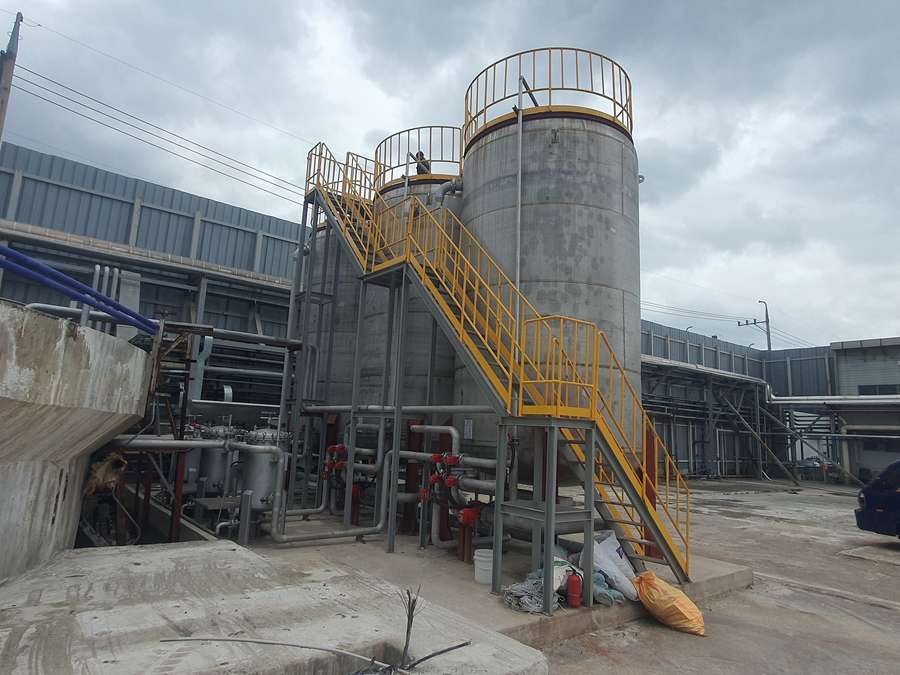
For a water treatment facility, the balance of the whole process matters more than any single unit. We size capacity and residence time and configure automatic control so every stage — from flow adjustment through chemical reaction to solid-liquid separation and filtration — connects stably.
DESIGN POINT
Buffer capacity is secured so downstream processes keep running stably despite changes in flow rate and concentration.
Designed so reaction conditions and filtration stages can be adjusted to match treatment targets.
Controlled so chemical dosing, pump operation, and water-level management run efficiently.
FIELD APPLICATION