01
Contaminated Gas Inflow
Odor and VOCs pass through pre-treatment before entering the reactor.

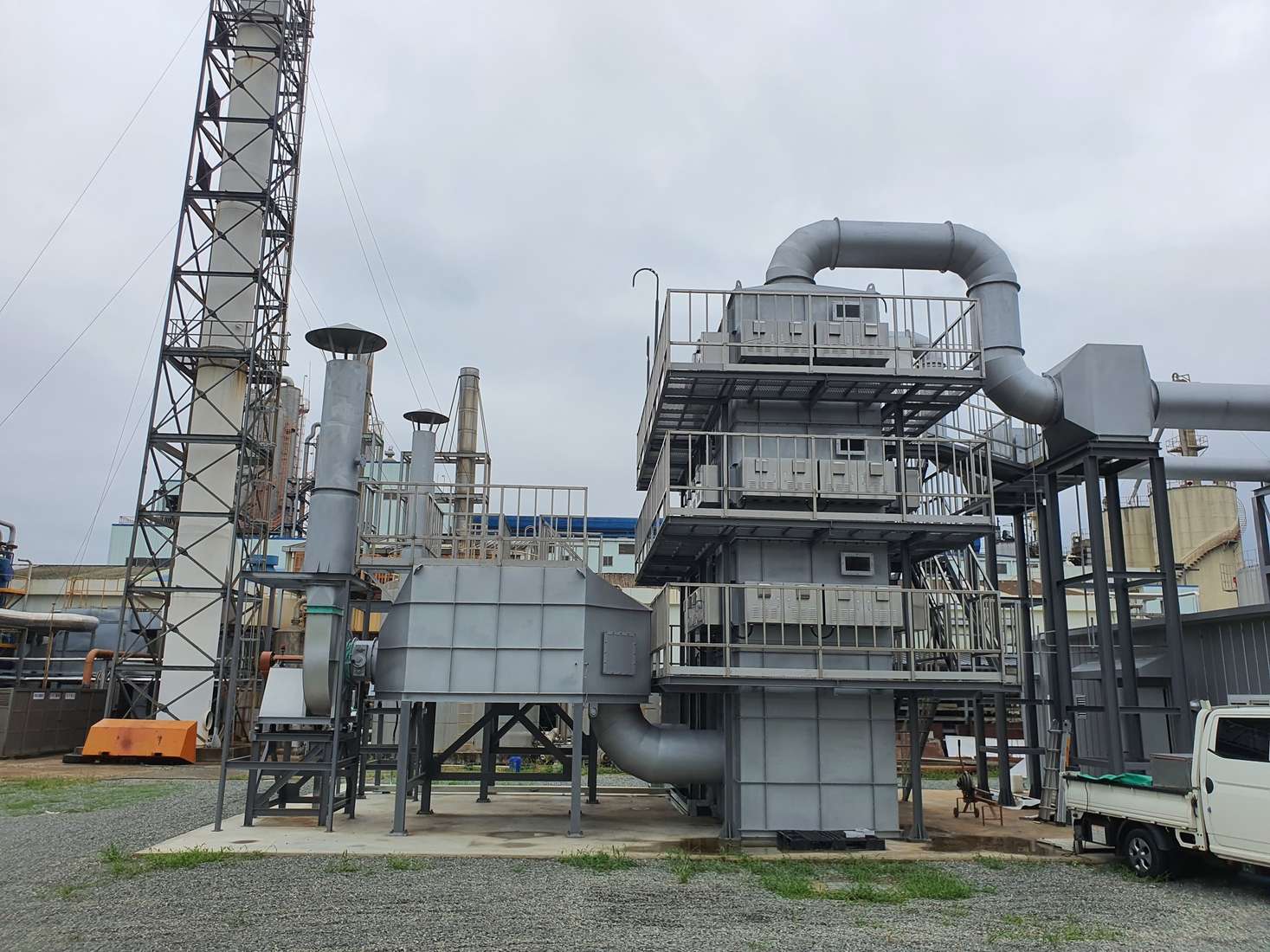
CORE TECHNOLOGY
LOW-TEMPERATURE PLASMA
Plasma is the fourth state of matter, after solid, liquid, and gas. Applying electrical energy to a gas produces highly reactive particles such as electrons, ions, and radicals.
These active particles react rapidly with the molecular structure of odor and VOCs, converting them into low-molecular-weight substances. Changjo Eng optimizes plasma and catalytic processes to match each site's airflow, concentration, and gas composition.
HOW IT WORKS
Odor and VOCs pass through pre-treatment before entering the reactor.
Electrical energy generates active species such as electrons, ions, and radicals.
Highly reactive particles react with pollutants, driving oxidation and decomposition.
The catalyst layer further treats residual substances to improve stability.
TWO TECHNOLOGIES
We continue to advance both the technology already applied in the field and the technology under development for the future.
GAD (Gliding Arc Discharge) is a method in which an arc formed between electrodes travels along the gas flow, creating a wide reaction zone. It is the core technology Changjo Eng has applied to every plasma system it has installed to date.
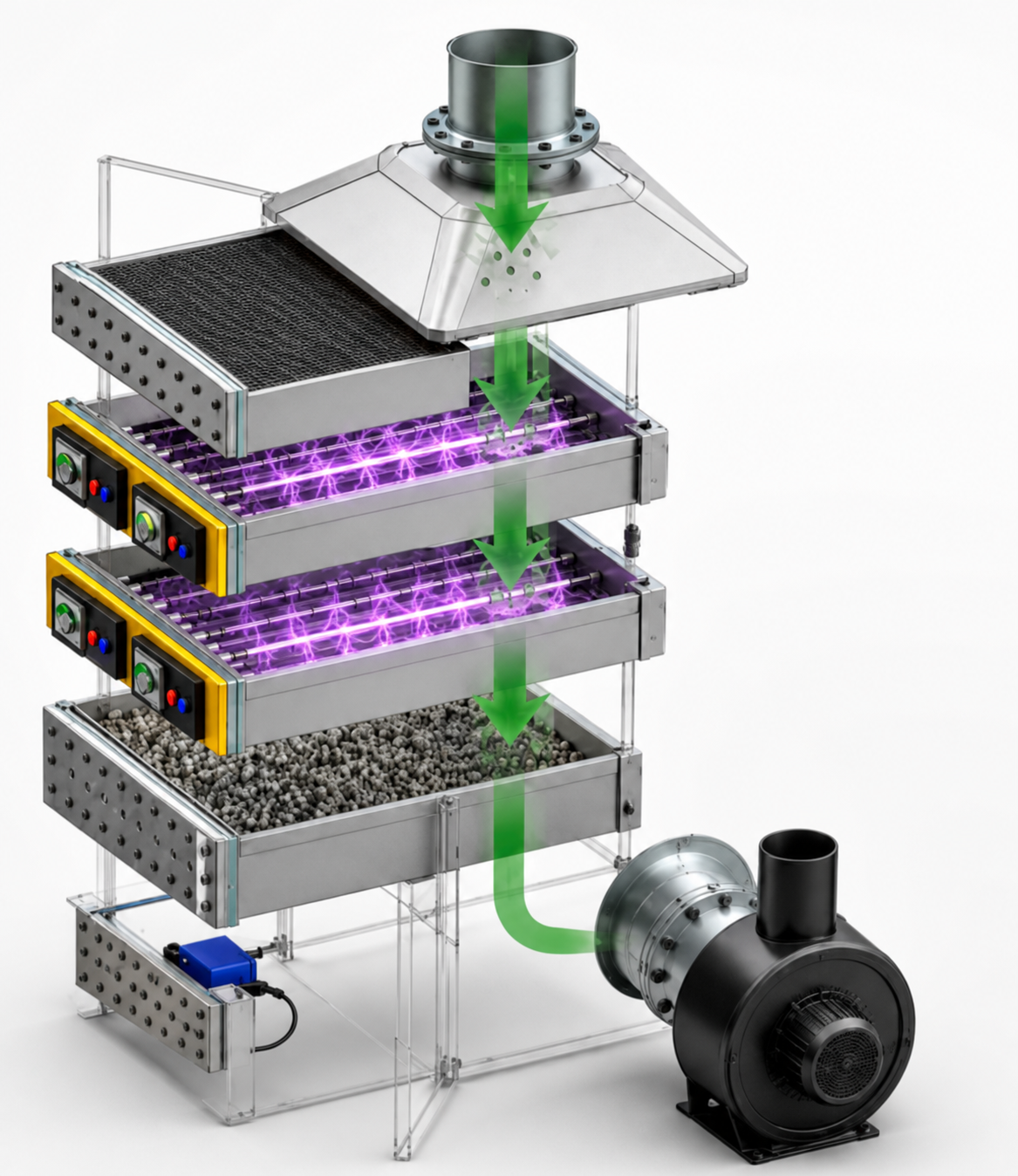
DBD (Dielectric Barrier Discharge) uses a dielectric barrier between electrodes to create a wide, stable low-temperature plasma. We are researching a next-generation system that combines it with a catalyst to efficiently treat VOCs and odor.
DBD PLASMA R&D
FIELD APPLICATION